
Bugatti Develops World's First Brake Caliper By 3-D Printer

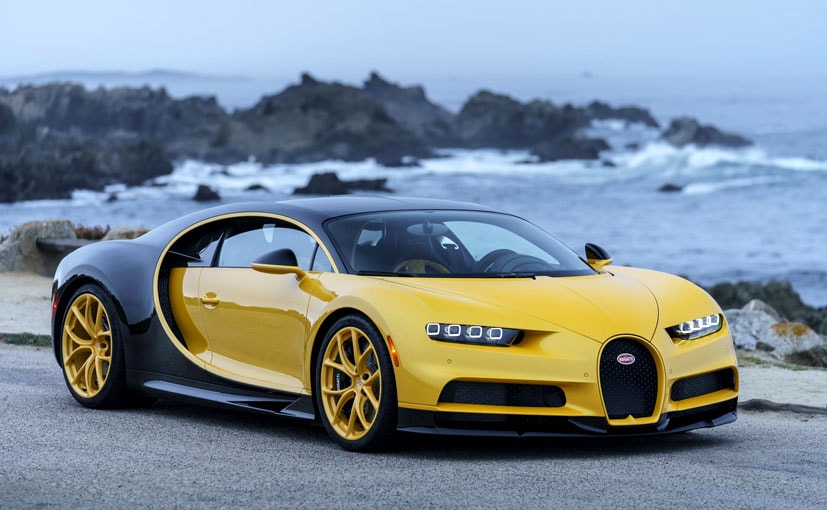
The Development Department of Bugatti, for the first time, has developed a brake caliper that can be produced by 3-D printing. While the main material used for the additive production of vehicle components to date has been aluminum; the new brake caliper is made from titanium, making it the world's largest functional component produced from titanium using 3-D printing processes. The French car-makers collaborated with Laser Zentrum Nord of Hamburg to develop these new brake calipers, who have been working on this since the beginning of the year. Vehicle trials for the use of the 3-D titanium brake caliper in series production are to start in the first half of the year.
Also Read: Bugatti Announces Worldwide Recall Of Chiron. Here's Why
Frank Gotzke, Head of New Technologies, Technical Development Department, Bugatti Automobiles S.A.S said, "Vehicle development is a never-ending process. This is particularly true at Bugatti. In our continuing development efforts, we are always considering how new materials and processes can be used to make our current model even better and how future vehicles of our brand could be designed."
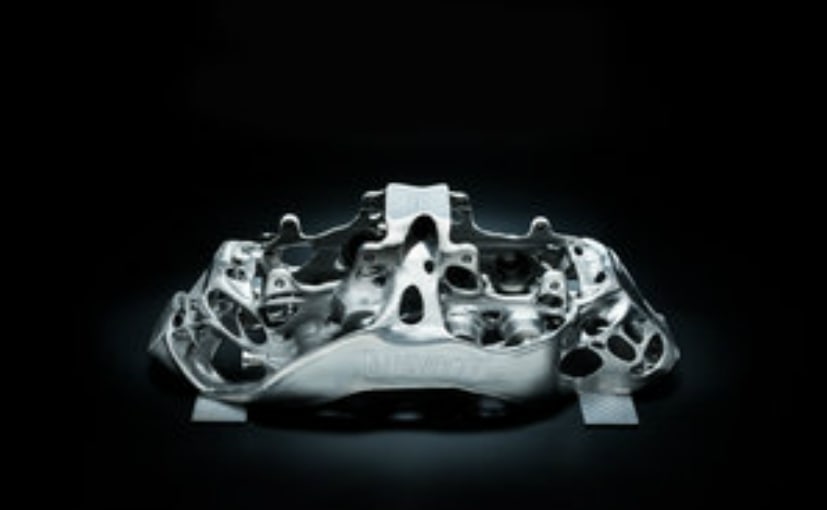
(Bugatti currently uses the most powerful brakes in the world on the new Chiron)
Bugatti currently uses the most powerful brakes in the world on the new Chiron. The brake calipers were an entirely new development. They are forged from a block of high-strength aluminum alloy. With eight titanium pistons on each of the front calipers and six on each of the rear units, these are also the largest brake calipers currently installed on a production vehicle. The brake calipers of the Chiron are produced using bionic principles on the basis of a natural model. The new architecture combines minimum weight with maximum stiffness. The new titanium brake caliper weighs about 2.9 kg, while the aluminum component currently used, weighs 4.9 kg.
Also Read: Bugatti Chiron Sets World Record In Under 42 Seconds
Gotzke added, "In terms of volume, this is the largest functional component produced from titanium by additive manufacturing methods. Everyone who looks at the part is surprised at how light it is - despite its large size. Technically, this is an extremely impressive brake caliper, and it also looks great."
The development time for the 3-D-printed titanium brake caliper took about three months, from conceptualizing to the production of first printed component. The basic concept was sent to Laser Zentrum Nord as a complete data package. They then carried out the process simulation, the design of the supporting structures, actual printing and the treatment of the component. Bugatti was responsible for finishing.





Latest News


 car&bike Team | Jun 30, 2026Tata Sierra EV Launch LIVE Updates: Price, Specifications, Features, ImagesTata is expected to announce complete details of the Sierra EV today. Watch this space to get all the updates firsthand.1 min read
 car&bike Team | Jun 29, 2026Tata Sierra EV Launch Today: What To Expect?The Sierra EV is expected to share much of its package with the Harrier EV.3 mins read
 car&bike Team | Jun 29, 2026Delhi EV Policy Approved: Electric Cars Under Rs 30 Lakh To Get Full Tax ExemptionThe new policy offers purchase incentives and scrappage benefits while laying down a roadmap for EV-only registrations across several vehicle segments, including two-wheelers from 2028.2 mins read
 car&bike Team | Jun 29, 2026New-Gen BMW X5 Teased Ahead Of Global Debut TomorrowThe teaser previews a fresh X-shaped lighting signature in a familiar illuminated grille setup.3 mins read
 Jaiveer Mehra | Jun 28, 2026Nissan Tekton Spied Undisguised Ahead Of July 9 DebutSole image of the SUV showcases the rear design of the SUV.1 min read
 Carandbike Team | Jun 28, 2026Renault Kwid Facelift India Launch On July 3Latest facelift marks the second major update for the entry hatchback since its launch in 2015.1 min read
 Seshan Vijayraghvan | Jun 29, 2026Renault Kiger vs Toyota Urban Cruiser Taisor: Which Underdog Deserves Your Money?Both the Kiger and the Taisor promise strong performance, solid features, comfortable cabins and everyday usability, all without breaking the bank. But which of these underrated subcompact SUVs deserves your money? Let's find out.1 min read
 Seshan Vijayraghvan | Jun 29, 2026Skoda Kodiaq RS Review: The Best Kodiaq Yet?The Skoda Kodiaq RS is finally here, and it's every bit as exciting as I expected. But was it worth the wait?7 mins read
 Bilal Firfiray | Jun 28, 2026BMW X6 M60i Review: It’s Back And HOW!The BMW X6 M60i blends a 530bhp twin-turbo V8, with its unmistakable coupe-SUV styling. There’s plenty of character, but is it worth your money?6 mins read
 Janak Sorap | Jun 25, 2026350cc Bajaj Dominar 400 Review: Same Character, Lower PriceA slightly lower displacement engine, a significantly lower price tag and nearly the same performance — the Bajaj Dominar 400 aims to be smarter rather than faster.6 mins read
 Preetam Bora | Jun 25, 20262026 Bajaj Pulsar NS400Z First Ride Review: Smaller Engine, But Should You Buy It?The Bajaj Pulsar NS400Z won our Two-Wheeler Upgrade of the Year. Then new tax slabs happened. Smaller engine, same badge – but does it still deliver?6 mins read