
FAME-II Subsidy For Electric Two-Wheelers Slashed; EV Players React
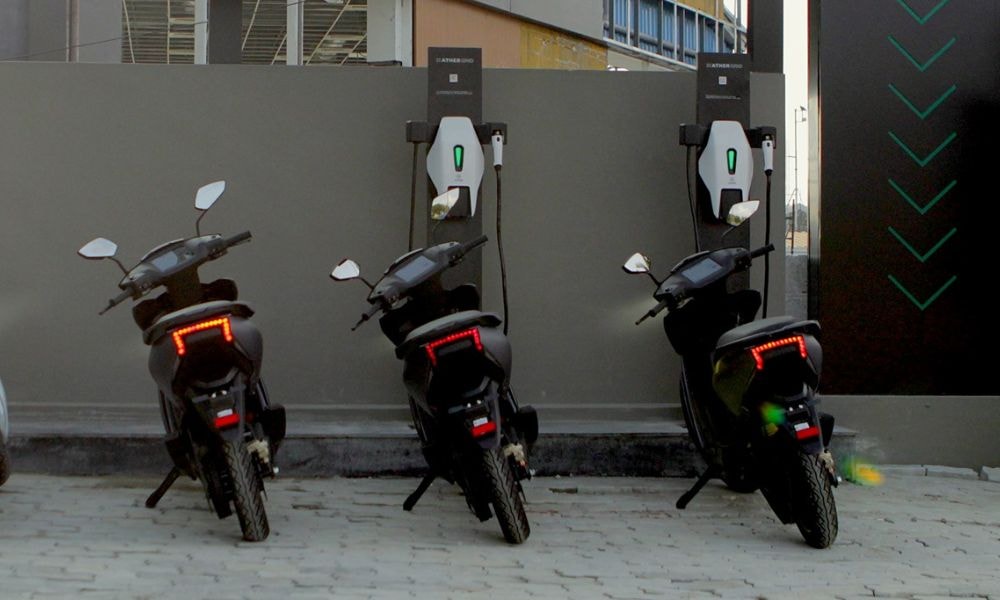
- Government issues notification outlining reduction in FAME-II subsidy for electric two-wheelers.
- Total subsidy will now be capped at 15 per cent of the vehicle’s ex-factory price, as opposed to 40 per cent at present.
- Prices of premium electric two-wheelers set to rise by anywhere between Rs 20,000 to Rs 35,000 from June.
It’s official – prices of electric two-wheelers (E2W) will go up by a significant margin from June 2023 onwards, with the government slashing subsidies under the Faster Adoption and Manufacturing of Hybrid and Electric Vehicles (FAME-II) scheme for E2Ws. In a notification dated May 19, the Ministry of Heavy Industries has reduced the subsidy available on electric two-wheelers to Rs 10,000 per kWh of battery capacity, compared to the Rs 15,000 per kWh offered up until now. Additionally, the total subsidy is now limited to 15 per cent of the E2W’s ex-factory price (which cannot exceed Rs 1.50 lakh), compared to the 40 per cent limit in place at present. This spells a subsidy reduction of over 60 per cent for several manufacturers operating at the premium end of the market.
Also Read: Electric Two-Wheeler Sales In April 2023: Overall Sales Dip Sharply, But Ola Sales Soar
The amount originally allocated by the government for E2Ws, under the Faster Adoption and Manufacturing of Hybrid and Electric Vehicles (FAME-II) scheme, which was fixed at Rs 2,000 crore, is nearly entirely exhausted. In order to ensure subsidy support isn’t withdrawn entirely (and abruptly) in a way that hurts the industry, the heavy industries ministry has decided to allocate an additional Rs 1,500 crore to E2Ws from the unutilised funds allocated for electric three- and four-wheelers under the scheme.
Also Read: FAME-II Controversy: Hero Electric Receives Notice For Subsidy Recovery
carandbike understands manufacturers were given the option to continue claiming subsidies under the present framework. However, at the current rate of sales, the additional Rs 1,500 crore allocated for two-wheelers would be exhausted by August, after which there would be no more incentives left to claim.
Also Read: Hero MotoCorp To Reimburse Vida V1 Buyers For Chargers; Slashes E-Scooter Prices
Instead of having to deal with a complete withdrawal of subsidies, manufacturers instead asked the authorities to revise the subsidy structure, which will help prolong support till around February-March 2024. Notably, the FAME-II scheme is scheduled to end on March 31, 2024, and there is no word on whether the scheme will be extended at all.
Also Read: TVS To Refund iQube Customers Who Paid Over Rs 1.50 Lakh For The E-Scooter
Industry Reacts To FAME-II Subsidy Reduction
While most manufacturers are yet to respond to the news of the reduction in FAME-II subsidies, a few prominent names from the E2W industry have reacted to the government’s decision to slash incentives.
Ather Energy co-founder Tarun Mehta took to Twitter with his response to the development, saying that ‘the industry must stand on its own feet very soon’ following the subsidy reduction. Mehta quoted a tweet published by Ather’s official handle on the platform, which mentioned prices of the 450X may rise by up to Rs 32,500 from June 1 onwards.
"We are evaluating price increases in line with the new FAME-II guidelines", said Sanjay Behl, CEO and Executive Director, Greaves Electric Mobility.
Bounce CEO Vivekananda Hallekere also took to Twitter, terming the reduction in subsidies ‘a great move’, as he believes the scheme, in its current form, wasn’t ‘logical’ and that manufacturers were being incentivised ‘to be inefficient’. Notably, E2Ws such as the Bounce Infinity E1 will witness a comparatively lower reduction in subsidy amount, as the maximum subsidy available for it so far was Rs 28,500 owing to its smaller battery.
What The Price Impact Could Be For Premium E2Ws
Range-topping models from manufacturers such as Ola Electric, Ather Energy, Tork Motors and Hero MotoCorp (Vida), which, up until now, qualified for an incentive of as high as Rs 60,000 thanks to their large battery packs, will now be eligible for a maximum incentive of Rs 22,500 – less than half of what was offered so far. As a result, their prices are expected to go up by a substantial amount.
For the Ather 450X (which qualified for an incentive of up to Rs 55,000 so far), the subsidy will drop by approximately Rs 32,500. The reduction in subsidies for Ola’s S1 and S1 Pro will be Rs 22,000 and Rs 37,000, respectively. Tork’s Kratos R, too, will witness a subsidy reduction of Rs 37,500, with the Hero Vida V1’s incentives slashed by Rs 28,500 to Rs 37,500. Models equipped with comparatively smaller batteries, such as the TVS iQube and Bajaj Chetak, will see their subsidies drop by Rs 28,500 and Rs 22,500, respectively.
It remains unclear if manufacturers will pass on the entirety of the reduction in subsidies, in the form of an immediate price hike, to customers. However, with input costs only having risen over the last 24 months and battery prices not having softened, most manufacturers – especially start-ups – will inevitably be forced to pass on a substantial part of the vehicle’s price that is no longer covered by incentives to the end buyer, which could be anywhere between Rs 15,000 to Rs 30,000, depending on the model and manufacturer. This is expected to reflect in electric two-wheeler sales across the country, which are expected to slow down in the coming months as a result.

With the automotive universe on the cusp of a once-in-a-lifetime transformation, Amaan believes that the present is the most exciting of times for a motoring enthusiast. Having spent nearly a decade covering the auto sector for several leading publications including BBC TopGear and Firstpost, he is now deeply invested into the electric vehicle space, as the learnings to be made are immense. Amaan also enjoys sport nearly as much as he enjoys cars, bikes, and hopes to be at the Isle of Man TT someday.
Read all latest news and reviews from Amaan Ahmed →


Latest News


 car&bike Team | Sep 30, 2026Royal Enfield Himalayan 440 Bookings Temporarily Halted After Strong DemandRoyal Enfield has temporarily stopped accepting bookings for the Himalayan 440 after selling through around six months’ worth of planned production.1 min read
 car&bike Team | Sep 30, 2026New Royal Enfield Himalayan 750 Spied In Four ColoursThe upcoming Royal Enfield Himalayan 750 has been spotted in four colour schemes.1 min read
 Sarthak Mahajan | Sep 30, 2026Porsche Cayenne Electric Launched At Rs 1.77 CrorePorsche has launched the Cayenne Electric twins in the Indian market, producing up to 1,140 bhp and 1,500 Nm of torque.3 mins read
 car&bike Team | Sep 30, 2026Yamaha R15 M Could Be Discontinued; Base Variants To ContinueYamaha likely to discontinue the R15 M, creating a wider price and positioning gap between the newly launched R2.1 min read
 car&bike Team | Sep 30, 2026CAFE-III Norms For Cars Released, Electric Vehicles To Benefit More Than Small CarsThe new norms will come into effect from 1 April 2027 and remain applicable up to 31 March 20321 min read
 Shams Raza Naqvi | Sep 30, 202610 New Car Launches In October: Hyundai Bayon, Duster Hybrid And Audi Q3 Lined UpThe festive season will well and truly kick in with as many as 10 new cars hitting the roads in October5 mins read
 Janak Sorap | Oct 1, 2026Yamaha YZF-R2 Track Review: New TerritoryYamaha's all-new YZF-R2 brings 200cc performance, lightweight construction and R-series DNA to a new generation of riders, but its true track potential is held back by one crucial component.1 min read
 Bilal Firfiray | Sep 28, 2026Renault Triber 1.0 Turbo Review: Was It Necessary?With the new RGEP platform, the Triber has received a much-awaited turbocharged petrol engine. It makes more power now, but was it necessary for this seven-seater MPV's fitness to purpose?5 mins read
 Girish Karkera | Sep 26, 2026Mahindra Thar OG Review: An Ode To The Past But Aimed At The FutureOn the surface, the new Mahindra Thar OG might look like a facelift, but that is more than meets the eye.7 mins read
 Jafar Rizvi | Sep 28, 2026TVS Orbiter Long-Term Review (Report 2): Slow But SmoothAfter nearly three months with the TVS Orbiter, its relaxed performance remains its biggest weakness, but easy handling, comfort and usable real-world range make it a capable city commuter.1 min read
 Bilal Firfiray | Sep 19, 2026MG Hector Tomahawk EV Review: Play It SafeMG’s new electric SUV has one of the coolest names ever, and the coolest temperament amongst its peers. But is it worth buying?7 mins read