
Renault Kwid Review

- The Kwid marks Renault's entry into the small car segment
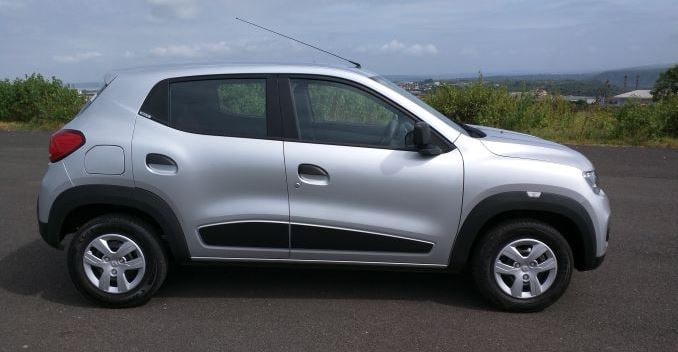
- It's a small car but gets SUV kind of styling
- 98 percent of the parts on the Kwid have been localised
And, in this case, Renault has thrown everything - including the kitchen sink and a 7-inch touchscreen - at the market. It has sold over 1.2 lakh Duster SUVs in India, and have captured a 2% share of the market. Now their target is 5%! And this is the car that will help them achieve that target. The Kwid is a brand new hatchback, built on a completely new architecture. And it's key differentiation, in Renault's own words, it its 'SUV-like' looks.
Renault has been thinking of entering the small car space for quite some time. To take advantage of 'frugal engineering,' as Renault CEO Carlos Ghosn says, Renault was exploring the option of developing a small car with Bajaj. And while that didn't quite make it to fruition,
Also Read: Renault Launches Kwid at Rs 2.56 Lakh
Nissan - part of the Renault- Nissan Alliance - did launch the low-cost Datsun brand in India, with its first product being the Go hatchback. So, clearly, they've learned a thing or two from the development of the Go, and have thought long and hard before engineering the Kwid.
And while the SUV-like appearance is the most visible differentiator, a closer look reveals the amount of work done behind the scenes. 98% of the parts have been localised, while 80% of the engineering and development has been undertaken by Renault's Indian engineers. Clearly, the company has taken steps to understand the market and develop a product accordingly. As Ghosn pointed out, they could have easily build a car with all the bells and whistles, but the aim is to make one within the price bracket of Rs 3-4 lakhs. The final prices will be revealed at the launch in a few weeks time.
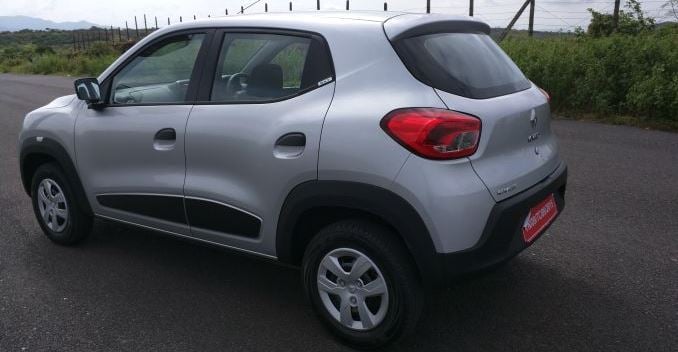
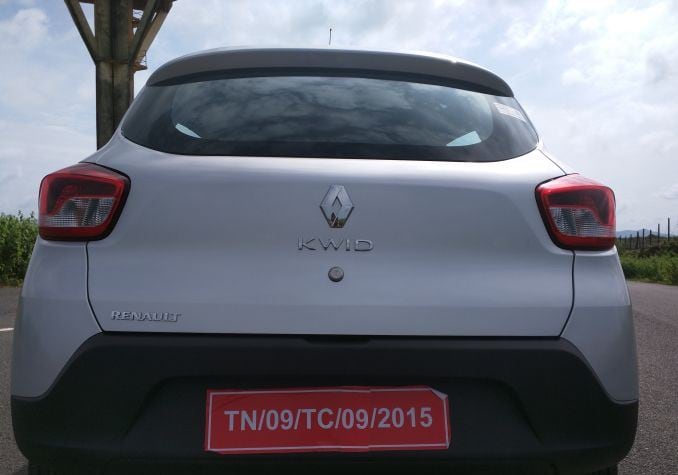
In terms of its appearance, the Kwid makes a statement - the Duster-like looks give it a lot of road presence. Although it's not a large car, the wide front grille, the 180mm ground clearance, and the plastic cladding on each side combine together to ensure that it has an imposing stance.
Inside, the digital instrumental cluster is very clear and straightforward. Instead of a tachometer, it has a gear shift indicator, which could have been larger. More than that, what dominates the cabin on the top-end variant is a 7-inch touchscreen, which sits proudly in the centre console. The infotainment system has been borrowed from the Duster, and offers Bluetooth connectivity and navigation - another segment first.

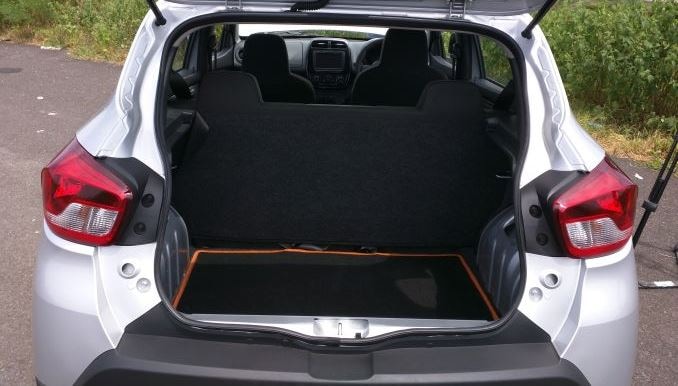
The rear seats are quite spacious, especially in terms of headroom. The boot offers 300 litres of space - which is pretty good for a small car. Overall, Renault has done a fairly decent job of packaging the Kwid.
Under the hood, the Renault Kwid houses a brand new 800cc, three-cylinder engine. As you start it up, you do notice that the idle is a little lumpy. However, when it gets going, the refinements levels are very good. After all, it has four valves per cylinder - and hence it's free of any thrum or vibration associated with three-cylinder motors. At 660 kgs, It's also impressively light. However, it does feel a little defeated when you come up against even the smallest incline. This is when you feel that the 53bhp of power and 72Nm of torque are inadequate - even though it is a small car. However, it is very impressive in the ride-and-handling department, while offering good high-speed stability.
It's clear that the inherent DNA of the Renault cars has been transferred to the Kwid, in terms of its ride-and-handling prowess. On rough roads and even off-road, the Kwid was extremely comfortable and handled very well. The high ground clearance allowed us to take some liberties, and we even managed to get it on the beach to take some pictures. And despite its ride height, the body control is very good as well.
Renault claims the fuel efficiency of the Kwid is 25.17 km/l, making it the most fuel efficient car in the country. And the main reason for the spritely performance and its excellent ride-and-handling is the low weight of the car. The Renault workforce has spent a lot of time and effort on making this possible. The engine block is made of aluminium, while the entire intake manifold and head is plastic, saving two kilos. The plastic oil pan saves 1 kilo, and a reduction in the number of parts, and the associated nuts and blots in the car, saves another 8 kilos. For instance, it has only three wheel lugs and a single windshield wiper.
So what about the safety aspects of the Kwid? Well, it meets all the requirements set for the Indian roads - which are negligible at best. However, this car has been designed for the world market, and therefore it's engineered to meet all the safety requirements of countries such as Brazil, and even Europe. That, of course, will mean adding weight to the vehicle, but the basic structure will remain the same. In India, a driver-side airbag is available as an option only on the top variant.
All told, though, Renault has been able to provide an aspirational vehicle in the small car space - and this is, perhaps, the greatest strength of the Kwid. The French manufacturer is offering 60 categories of accessories and six predefined accessory packs, indicating that they've understood the Indian market well.
Also Read - Renault Kwid vs Maruti Suzuki Alto 800 vs Hyundai Eon: Specification Comparison
It's only downside compared to the Maruti Alto is the relatively limited dealership network of Renault. While the French car maker has 253 showrooms across India, Maruti has around 1,500. This problem is exaggerated further because Renault feels that the rural market holds a lot of potential for the Kwid.
But purely from a product point of view, Renault has got a clear winner in their hands. We'll have to wait and see what the pricing is like, and also how the market responds to this SUV-like small car. For now, let's just say that Renault is quietly confident about its latest offering.
Renault Kwid Specs:
Engine: 799cc
Fuel: Petrol
Power: 53bhp
Torque: 72Nm
Transmission: 5-speed manual
Claimed Mileage: 25.17Km/l
Related News


Learn more about Renault Kwid


Popular Renault Models


Latest Cars


Upcoming Cars


Latest News


 car&bike Team | Oct 15, 20262027 Ducati Panigale V4 Revealed; Gets More Power & Updated ElectronicsThe 2027 Ducati Panigale V4 and Panigale V4S get more power – 215 bhp, sharper handling and an even more sophisticated electronics package.1 min read
 Jafar Rizvi | Oct 15, 2026BMW F 450 RR UnveiledThe BMW F 450 RR joins the F 450 family with S 1000 RR-inspired styling.5 mins read
 Sarthak Mahajan | Oct 15, 2026Mahindra XUV 3XO CNG vs Tata Nexon CNG vs Maruti Suzuki Brezza CNG: Specifications ComparedThe Mahindra XUV 3XO is now available with three powertrain options: petrol, diesel and CNG.1 min read
 Jaiveer Mehra | Oct 15, 2026Stellantis To Launch 12 Citroen, Jeep Models In India By 2030Stellantis eyes branching out to new segments in the Indian market with seven all-new models, including an MPV and a premium pickup, on the cards.2 mins read
 Jafar Rizvi | Oct 15, 2026Jeep To Launch Toyota Hilux Rival In India By 2030Jeep could launch the Gladiator pickup in India by 2030, taking on the Toyota Hilux as part of Stellantis’ new roadmap.2 mins read
 Sarthak Mahajan | Oct 15, 2026Citroen Plots New Entry-Level Car For India Under Stellantis' FaSTLAne 2030 RoadmapThe A-segment car will be part of Stellantis’ 12-product plan for Jeep and Citroën over the next three years, backed by a fresh investment of approximately ₹4,000 crore.2 mins read