
Toyota To Consider Selling Locally Developed EVs In China

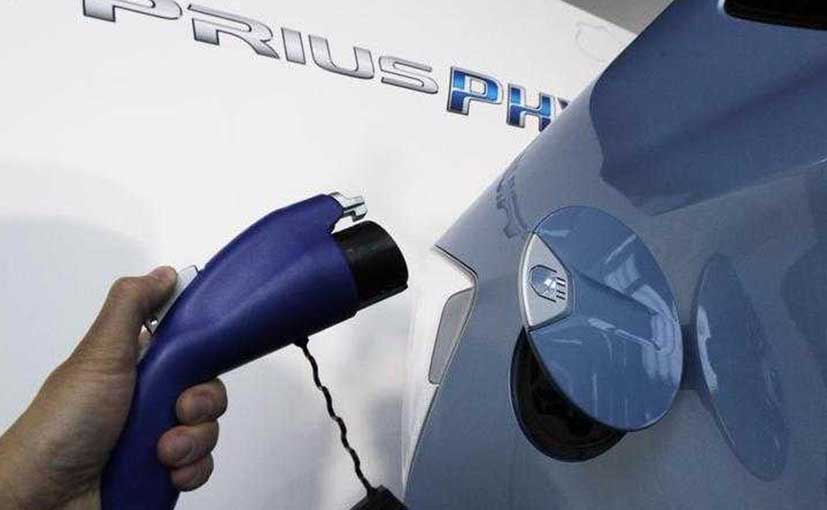
- Toyota's JV partners are China FAW Group Corp & Guangzhou Auto Group
- Toyota plans to locally manufacture the EV
- China has set strict quotas for EVs that come into effect from 2019
Toyota Motor said it would consider selling locally designed and manufactured all-electric vehicle models in China, as it looks to expand its EV line-up and comply with Beijing's upcoming new-energy vehicle (NEV) production and sales quotas. China has set strict quotas for electric and plug-in hybrid cars that come into effect from 2019. It has an ambitious target of 2 million NEV sales by 2020 and has signalled longer-term it will phase out the sale of conventional petrol-engine cars.
Also Read: Lexus To Source Self Driving Safety Features From Toyota
This seismic shift towards NEVs has prompted a flurry of electric car deals and new launches as manufacturer's worldwide race for a share of the world's largest auto market.
"To respond to expanding demand for EVs, more widely and more comprehensively, we have begun considering the possibility of having our China joint-venture partners provide us with EVs," Hiroji Onishi, Toyota's head of China operations, said at a press briefing at the Guangzhou auto show on Friday.
Foreign car manufacturers are allowed to operate in China by forming joint ventures with Chinese partners. Toyota's joint venture partners in the country are China FAW Group Corp and Guangzhou Automobile Group.
Also Read: Toyota Camry Hybrid Production Stopped In India. Here's Why
Apart from the all-electric battery car models developed by its local joint ventures, Toyota also plans to launch an EV model, designed in Japan, in China in 2020.
But the EV engineered in Japan would have to be produced in China to qualify for NEV credits, but it was not immediately clear whether Toyota planned to locally manufacture the EV.
When China's green car quotas take effect in 2019, automakers will need to accumulate credits by producing and selling enough NEVs to hit a threshold equivalent to 10 percent of annual sales. That level would rise to 12 percent for 2020.
Toyota said it was also studying the feasibility of selling hydrogen fuel-cell commercial vehicles in China.
Also Read: Toyota Showcases The Concept-i Ride Ahead Of Tokyo Motor Show
It began testing hydrogen fuel-cell cars in China in late October as part of a study to determine the feasibility of selling its Mirai hydrogen electric passenger car in China.
"We plan to continue to study fuel-cell cars' feasibility in China and have decided expand its scope to include fuel-cell buses," Onishi said.
(Reporting By Beijing Newsroom and Hong Kong Newsroom; Editing by Himani Sarkar)
(This story has not been edited by NDTV staff and is auto-generated from a syndicated feed.)
Related News


Popular Toyota Models


Latest Cars


Upcoming Cars


Latest News


 Hansaj Kukreti | Jun 30, 20262026 Tata Sierra EV: In PicturesThe Much-Awaited Tata Sierra has Finally been launched in its all-electric avatar. Let's take a closer look at it.3 mins read
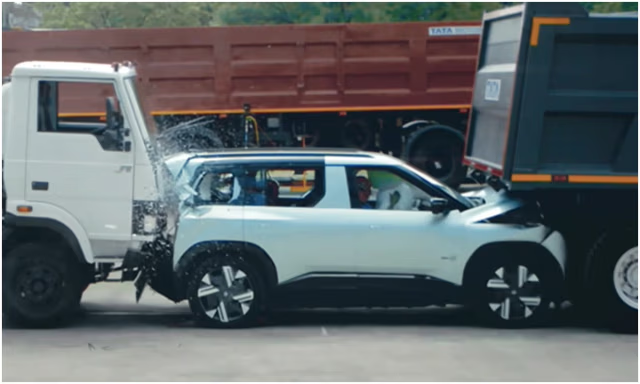 Amaan Ahmed | Jun 30, 2026Tata Sierra EV Sandwiched Between Two Trucks In Novel Crash Test: Watch VideoNobody saw Tata's latest crash test coming -- not even the Sierra EV it was conducted on1 min read
 Jaiveer Mehra | Jun 30, 2026Tata Sierra EV Launched In India At Rs 18.79 Lakh: 5 Variants, 63 & 75 kWh Battery Options, 500+ km RangeElectric derivative of the Sierra is based on the Acti.ev+ platform and is offers over 500 km of range in real-world use.4 mins read
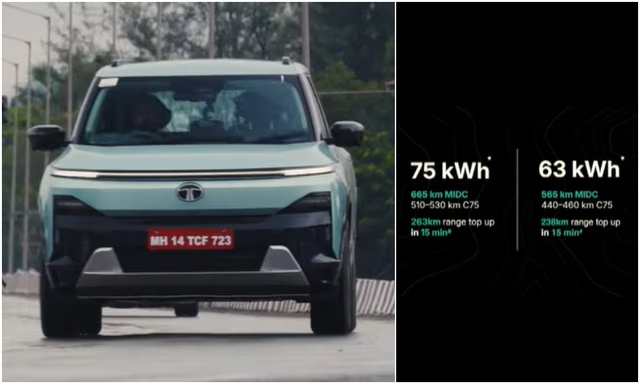 Amaan Ahmed | Jun 30, 2026Tata Sierra EV Real-World (C75) Range Figures RevealedUnlike what you may have seen on social media in recent days, the Sierra EV will not cover 700 kilometres, not even on the forgiving Indian Driving Cycle test2 mins read
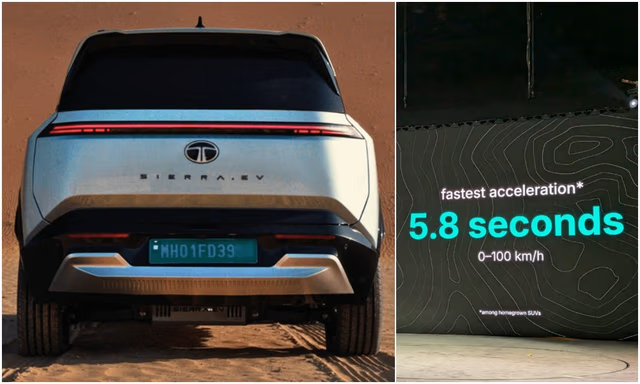 Amaan Ahmed | Jun 30, 2026Tata Sierra EV Is The Quickest-Accelerating Indian Car YetArmed with a dual-motor setup, the Sierra EV -- which is smaller and lighter than the similarly-specced Harrier EV -- is unsurprisingly rapid when it comes to acceleration.2 mins read
 car&bike Team | Jun 30, 2026Tata Sierra EV Launch LIVE Updates: Price, Specifications, Features, ImagesTata is expected to announce complete details of the Sierra EV today. Watch this space to get all the updates firsthand.1 min read
 Seshan Vijayraghvan | Jun 29, 2026Renault Kiger vs Toyota Urban Cruiser Taisor: Which Underdog Deserves Your Money?Both the Kiger and the Taisor promise strong performance, solid features, comfortable cabins and everyday usability, all without breaking the bank. But which of these underrated subcompact SUVs deserves your money? Let's find out.1 min read
 Seshan Vijayraghvan | Jun 29, 2026Skoda Kodiaq RS Review: The Best Kodiaq Yet?The Skoda Kodiaq RS is finally here, and it's every bit as exciting as I expected. But was it worth the wait?7 mins read
 Bilal Firfiray | Jun 28, 2026BMW X6 M60i Review: It’s Back And HOW!The BMW X6 M60i blends a 530bhp twin-turbo V8, with its unmistakable coupe-SUV styling. There’s plenty of character, but is it worth your money?6 mins read
 Janak Sorap | Jun 25, 2026350cc Bajaj Dominar 400 Review: Same Character, Lower PriceA slightly lower displacement engine, a significantly lower price tag and nearly the same performance — the Bajaj Dominar 400 aims to be smarter rather than faster.6 mins read
 Preetam Bora | Jun 25, 20262026 Bajaj Pulsar NS400Z First Ride Review: Smaller Engine, But Should You Buy It?The Bajaj Pulsar NS400Z won our Two-Wheeler Upgrade of the Year. Then new tax slabs happened. Smaller engine, same badge – but does it still deliver?6 mins read