
Toyota Launches New Mirai Fuel Cell Car In Fresh Push On Hydrogen Technology In Japan


Japan's Toyota Motor Corp put its revamped Mirai hydrogen fuel cell car, with 30% greater range, on sale on Wednesday in a fresh push to promote the zero-emission technology amid rapidly growing demand for electric vehicles, including its own. Toyota has failed until now to win drivers over to fuel cell vehicles (FCV), which remain a niche technology despite Japanese government backing, amid concerns about a lack of fuelling stations, resale values and the risk of hydrogen explosions.
The new Mirai launch comes after Prime Minister Yoshihide Suga announced a goal in October to cut Japan's carbon emissions to zero by 2050, in line with a European Union target and ahead of a pledge by Chinese President Xi Jinping to make his country "carbon neutral" by 2060. "The use of hydrogen is going to be an important factor in achieving carbon neutrality," Yoshikazu Tanaka, Mirai's chief engineer said. The car, he added represented a "departure point" for a broader use of hydrogen fuel cells beyond cars.
Hydrogen backers say it is cleaner than other carbon cutting technologies because water and heat are the only byproducts and it can be made from sources, including methane, coal, water, even garbage. Resource-poor Japan also sees it as a route to energy security.
By the end of September Toyota, however, had sold only 11,100 of its first generation Mirai, almost six years after its launch. Most other automakers have eschewed the technology in favour of electric vehicles (EV), with only Honda Motor Co and Hyundai Motor in neighbouring South Korea competing in hydrogen FCVs.

Toyota said it planned to increase the production capacity for all FCVs, including buses and trucks, to 30,000 a year from 3,000
The new Mirai, like its predecessor, is still beyond the budget of most drivers at about 5 million yen ($48,000) even after more than $10,000 in Japanese government subsidies.
Rather than produce a cheaper car, Toyota said it wants to lure drivers with longer range - enough to drive around 800 kilometres (497 miles) without refueling - added features such as autonomous parking and a lower, sleeker design achieved by moving the hydrogen power unit to the front of the vehicle from under the car.
Accompanying the Mirai's launch Toyota said it planned to increase the production capacity for all FCVs, including buses and trucks, to 30,000 a year from 3,000.
That output, however is still far behind sales of electric vehicles. In 2019, automakers sold 2.1 million electric cars alone, 40% more than the previous year, according to the International Energy Agency.
Toyota had planned to use the postponed 2020 Olympic Games in Tokyo to showcase its fuel cell technology, with 100 buses meant to shuttle visitors between venues. The games organizer also planned to power the Olympic flame with hydrogen.
The Mirai revamp comes after Toyota on Tuesday, announced plans to test small FCV trucks with Japan's three major convenience store operators, Seven & i Holdings' Seven Eleven, Itochu Corp's FamilyMart and Lawson Inc .
Toyota's best chance of selling the Mirai and other FCV may, however, be in neighbouring China, where it has an FCV partnership with Guangzhou Automobile Group (GAC) and FAW Group. There are around 7,000 FCVs are on the road in the world's biggest automarket, versus more than 4 million EVs.
China, which is aiming for more than 1 million FCVs in service by 2030 compared with a Japanese target for 800,000, in September announced fresh support measures for FCVs that included requiring projects receiving government subsidies to boost the number of hydrogen-charging stations and make efforts to cut fuel prices.
(This story has not been edited by NDTV staff and is auto-generated from a syndicated feed.)
Related News


Popular Toyota Models


Latest Cars


Upcoming Cars


Latest News


 car&bike Team | Aug 1, 2026Maruti Suzuki Sells More Than 2 Lakh Vehicles In July, Sets New Domestic RecordThe brand sold a total of 2,41,421 units last month which also included exports of 30,056 cars1 min read
 car&bike Team | Aug 1, 2026India-UK FTA: Aston Martin Announces Revised PricesAlong with the revised pricing, the British marque has refreshed its lineup by replacing the Vantage, DB12 and DBX with more powerful 'S' derivatives.4 mins read
 car&bike Team | Aug 1, 2026BMW 7 Series, i7 Facelift Bookings Open In India Ahead Of LaunchThe facelifted models were unveiled globally in April 2026 and are set to arrive in India.3 mins read
 car&bike Team | Aug 1, 2026Auto Sales July 2026: Growth For Tata, Mahindra And Hyundai; Nissan Jumps 218%July 2026 turned out to be a strong month for several carmakers in India. Tata Motors, Mahindra, Hyundai, MG Motor and Nissan all reported healthy year-on-year growth, with new model launches, exports and growing EV demand.4 mins read
 car&bike Team | Jul 31, 2026Hero Vida VX2 Now Available With Fixed 3.1 kWh Battery, Priced At Rs 1.13 LakhUnlike the existing removable-battery variants, the new VX2 variant comes with a fixed battery and direct-plug charging.1 min read
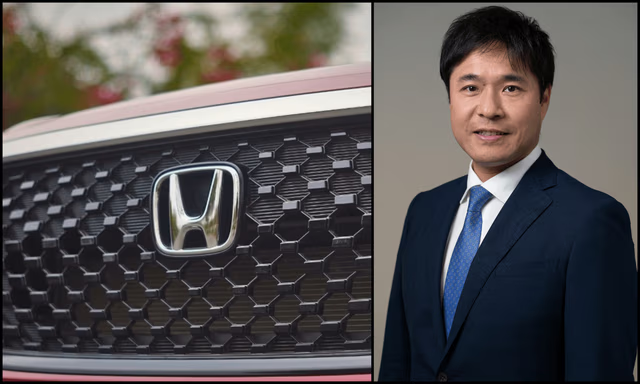 car&bike Team | Jul 31, 2026Honda Cars India Appoints Toshiyuki Yanagisawa As New President And CEOYanagisawa replaces Takashi Nakajima, who is set to move to Honda's regional headquarters after completing his stint in India.1 min read
 Bilal Firfiray | Aug 1, 2026Toyota Hilux Review: The InvincibleMarking it as the ninth generation, the Hilux comes with a major cosmetic overhaul. But is it still relevant enough for the current times or is it getting too long in the tooth?5 mins read
 Bilal Firfiray | Jul 30, 2026Kia Syros EV Review: Best EV To Buy Under Rs 20 Lakh?The Kia Syros EV comes into the game with a modern design, spacious cabin, strong performance, decent range and an aggressive pricing. But could it become the new benchmark under Rs 20 lakh?5 mins read
 Jaiveer Mehra | Jul 27, 20262026 Maruti Suzuki Brezza Facelift Review: Bestseller Joins The Turbo ClubWhile Maruti’s facelifts have always tended to bring subtle updates over the outgoing models, the latest Brezza brings some heavy updates under the skin, including a new 6-speed manual gearbox and, for the first time, a turbocharged petrol engine option.1 min read
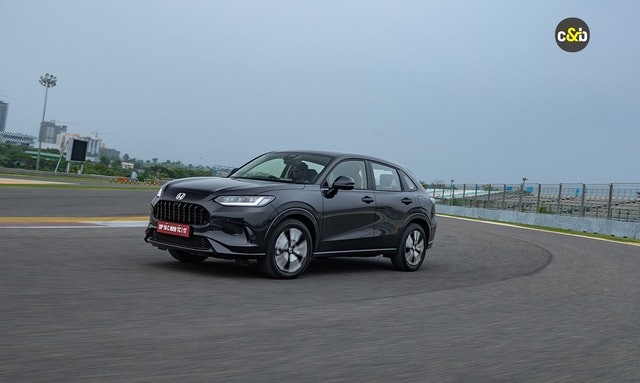 Bilal Firfiray | Jul 24, 2026Honda ZR-V Review: Who Is It For?Honda has brought the new ZR-V to India as their current flagship offering. It’s a CBU, it’s a hybrid, and it’s here for a limited few. Who is it for though?1 min read
 Girish Karkera | Jul 29, 2026Mercedes-AMG E53 4MATIC+ PHEV First Drive Review: Just What The Doctor OrderedThere are luxury cars and there are high-performance cars. But what if you want both for the price of one? Mercedes-Benz has a recommendation that promises to tread a fine line between the two – the second generation E53 with a twist.7 mins read