
The Evolution of the Mahindra Scorpio: The SUV That Redefined Mahindra

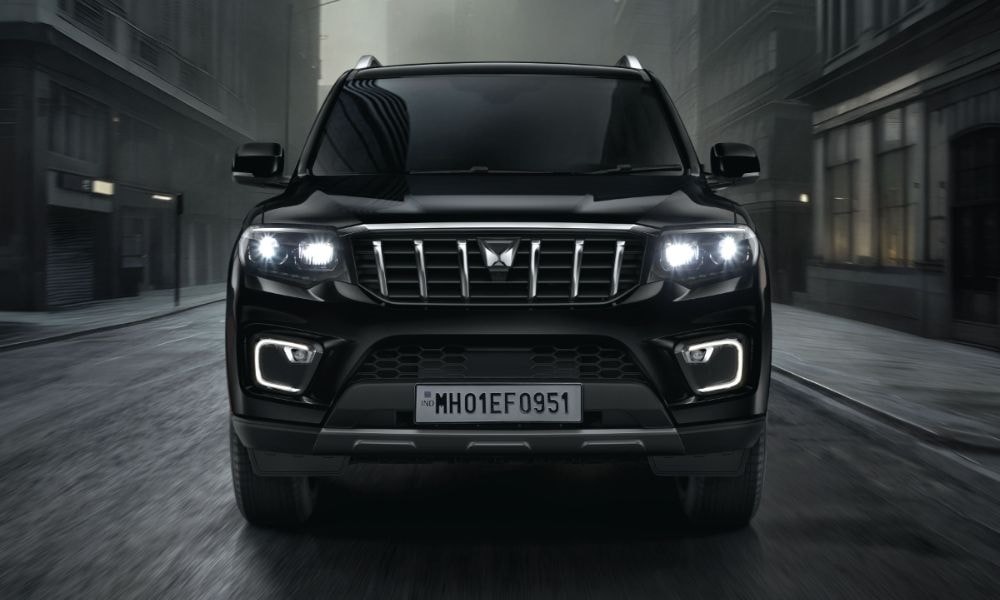
Prior to the Scorpio, Mahindra's reputation was largely built on its tough, utilitarian vehicles such as the Commander, Armada and Bolero. Everything changed with Project IDAM (Integrated Design and Manufacture). Under the leadership of Dr. Pawan Goenka and a team of approximately 120 young engineers, Mahindra spent almost Rs. 600 crore to build its first competitive SUV from scratch.
Launched on 20 June 2002, the Scorpio completely turned the perception of Indian buyers towards Mahindra. Over 20 years later, the Scorpio family has sold over 10 lakh units and is Mahindra's most successful SUV ever.
The First-Generation Scorpio (2002-2006)
The Scorpio came into the picture when the market was dominated by cars such as the Tata Safari and the Toyota Qualis. Starting at around Rs. 5.5 lakh, it brought bold styling, had true SUV capability and a commanding driving position that appealed to both urban and rural buyers.
Built Tough from the Start
The original Scorpio rode on a heavy-duty ladder-frame chassis with:
- Independent double-wishbone front suspension
- Leaf-spring rear suspension
- Rear-wheel drive with optional shift-on-the-fly 4WD
The setup delivered exceptional durability on rough roads, although the ride felt firm and bouncy at highway speeds.
The Original Engines
The first Scorpio was powered by a 2.6-litre SZ2000 diesel, producing 109 bhp and 260 Nm, paired with a 5-speed manual gearbox.
Mahindra also briefly offered a 2.0-litre Renault-sourced petrol engine producing 116 bhp, but buyers overwhelmingly preferred the diesel for its stronger low-end torque and better efficiency, making petrol variants extremely rare today.
Despite its simple cabin, the first Scorpio earned a reputation for being reliable, versatile and rugged.
Scorpio Gen 2: The CRDe Era and the Arrival of mHawk (2006-2014)
The first major update arrived in 2006, bringing significant mechanical improvements beneath the familiar bodywork.
The CRDe Revolution
The biggest upgrade arrived in 2006 with the new 2.6-litre CRDe common-rail diesel, developed with AVL Austria. Power increased to 115 bhp, but refinement improved even more. The engine became quieter, smoother and more responsive.
This update also introduced one of the Scorpio's signature design elements: the functional bonnet scoop, which directed cool air to the top-mounted intercooler.
A Huge Ride Quality Upgrade
Perhaps the biggest engineering improvement wasn't the engine. Mahindra replaced the old rear leaf springs with a multi-link rear suspension featuring coil springs and an anti-roll bar.
The result was:
- noticeably better ride comfort
- improved highway stability
- reduced body movement over uneven roads
It was one of the biggest improvements the Scorpio had ever received.
The Legendary mHawk Arrives
Late 2007 saw the arrival of the now-famous 2.2-litre mHawk diesel. Featuring a Variable Geometry Turbocharger (VGT) and DOHC architecture, it produced:
- 120 bhp
- 290 Nm
More importantly, it delivered stronger low-end torque, smoother acceleration and improved fuel efficiency. The mHawk would go on to power several Mahindra SUVs for years to come.
One of the First Affordable Automatic SUVs
Mahindra surprised buyers again in 2008 by introducing a 6-speed automatic transmission, sourced from DSI Australia. At a time when automatic SUVs were largely limited to premium segments, the Scorpio became one of the few ladder-frame SUVs to offer automatic convenience at an accessible price.
The 2009 Update
Another facelift followed with:
- Revised headlights and bumpers
- Updated fog lamps
- Wider availability of ABS
- Early Micro Hybrid technology, which shut off the engine during long idling periods to improve fuel efficiency
By the end of this phase, the Scorpio had evolved into a much more refined family SUV without losing the toughness that made it popular.
Scorpio Gen 3: A Bigger Transformation Than It Appeared (2014-2022)
Although the 2014 Scorpio looked like a facelift, it was effectively a major engineering overhaul. Mahindra invested over Rs. 250 crore, including around Rs. 100 crore on platform development alone, making this one of the biggest upgrades in the SUV's history.
A Stronger Platform Underneath
Mahindra adopted a hydroformed ladder-frame chassis, using high-pressure hydraulic forming to create stronger and lighter chassis rails.
Compared to the older frame, it offered:
- Better structural rigidity
- Reduced body roll
- Improved highway stability
- Sharper handling without compromising ruggedness
A More Modern Cabin
The familiar LX, SLE and VLX trims made way for the new S2, S4, S6, S8 and S10 lineup.
The cabin also became significantly more premium with features like:
- 6-inch touchscreen infotainment
- Automatic climate control
- Projector headlamps
- Steering-mounted controls
- Better dashboard design and materials
The Scorpio was no longer just rugged; it was becoming genuinely modern.
More Power for Highway Touring
Mahindra continued refining the mHawk diesel. By 2017, the engine produced 140 bhp and 320 Nm, while higher variants gained a 6-speed manual gearbox, improving cruising ability and overall drivability.
By now, the Scorpio had grown from a utilitarian SUV into a capable long-distance tourer that could comfortably compete with newer rivals.
Scorpio Gen 4: One Nameplate Becomes Two SUVs (2022-Present)
The biggest moment in Scorpio's journey arrived in June 2022. Mahindra split the lineup into two separate products, allowing buyers to choose between traditional ruggedness and modern family needs.
The result was the Scorpio Classic and the all-new Scorpio-N.
Scorpio Classic: Keeping the Original Spirit Alive
Rather than retiring the original design, Mahindra gave it a new lease of life as the Scorpio Classic.
While the boxy styling remained familiar, the biggest update came under the bonnet. The old cast-iron diesel engine made way for a lighter Gen-2 all-aluminium 2.2-litre mHawk, reducing front axle weight by nearly 55 kg. The engine produces 132 bhp and 300 Nm, paired with a 6-speed manual gearbox.
The Classic continues to attract buyers looking for a simple, rugged SUV without the added complexity of modern electronics.
Scorpio-N: A Complete Reinvention
If the Scorpio Classic honoured the past, the Scorpio-N was built for the future. Built on Mahindra's next-generation ladder-frame platform, the Scorpio-N was designed as a global SUV that could comfortably compete with far more expensive rivals.
For the first time, buyers could choose between two powerful engines:
2.0-litre mStallion Turbo Petrol
- 200 bhp
- 380 Nm
- 6-speed manual or 6-speed automatic
2.2-litre mHawk Diesel
- Up to 172 bhp
- Up to 400 Nm with the manual
- Up to 400 Nm (or 370 Nm on select variants) with the automatic
- Available with both rear-wheel drive and four-wheel drive on select variants
The performance leap over previous generations was dramatic, making the Scorpio-N the most powerful production Scorpio ever built.
Better Ride Without Losing Ruggedness
Mahindra introduced Frequency Dependent Damping (FDD), where the suspension automatically softens over speed bumps while stiffening over larger bumps to better control body movement. The rear suspension also uses a Watt's Linkage instead of a conventional Panhard rod, helping keep the axle centred during suspension travel. The result is noticeably better stability and ride comfort.
Technology Finally Caught Up
While earlier Scorpios were about toughness, the Scorpio-N added the premium features buyers now expected.
Higher variants offer:
- AdrenoX connected infotainment
- Sony premium audio system
- Wireless Android Auto and Apple CarPlay
- Dual-zone climate control
- Wireless charging
- Powered driver's seat
- Ventilated front seats
- Electric sunroof
- Auto-dimming IRVM
Mahindra has also introduced Level 2 ADAS on select variants, adding features like adaptive cruise control, autonomous emergency braking and lane keep assist for safer highway driving.
From Zero Stars to Five Stars
The older-generation Scorpio received a 0-star Global NCAP rating in 2016 after concerns over structural integrity during crash testing. Mahindra used those findings to completely rethink the next-generation SUV.
The Scorpio-N earned a 5-star Global NCAP rating, scoring 29.25 out of 34 for adult occupant protection under much stricter crash test protocols. It is still, to date, one of the biggest safety turnarounds achieved by an Indian SUV.
The Scorpio Craze Continues
More than two decades after launch, the Scorpio remains one of India's strongest SUV brands. The Scorpio-N created history on 30 July 2022, securing 1 lakh bookings in just 30 minutes, with the first 25,000 bookings completed in under a minute.
The momentum has only continued.
- The Scorpio family crossed 10 lakh cumulative sales in 2024.
- The final one lakh sales came in under a year, driven by the combined success of the Scorpio Classic and Scorpio-N.
- Today, the Scorpio lineup averages around 15,000 monthly sales, making it one of Mahindra's strongest-performing SUVs.
The Legacy of the Mahindra Scorpio
Few vehicles have changed the Indian car industry as much as the Mahindra Scorpio. It proved that an Indian manufacturer could build a world-class SUV from scratch, helped transform Mahindra into the country's leading SUV specialist, and inspired an entire generation of buyers to choose rugged, body-on-frame SUVs over conventional cars.
More than 20 years after its debut, the Scorpio continues to evolve while staying true to its roots. Whether it's the no-nonsense Scorpio Classic or the feature-packed Scorpio-N, the nameplate remains one of the strongest symbols of Mahindra's remarkable journey from building utility vehicles to creating some of India's most desirable SUVs.
Related News


Learn more about Mahindra Scorpio Classic


Popular Mahindra Models


Latest Cars


Upcoming Cars


Latest News


 Jafar Rizvi | Aug 25, 2026New Audi Q3 Debuts In India Ahead Of Festive Season LaunchThe new Q3 is expected to be launched in India in October this year.3 mins read
 Sarthak Mahajan | Aug 25, 20262027 Mitsubishi Pajero Global Unveil On September 2There are high expectations that it could return with a Diesel Hybrid engine.1 min read
 Jafar Rizvi | Aug 25, 2026Honda Rebel 300 Launched In India At Rs 2.22 LakhBookings are now open requiring a token amount of Rs 5,000 while deliveries are slated to begin from mid-October 2026.2 mins read
 Jaiveer Mehra | Aug 25, 2026MG Hector Hawk EV Launch Tomorrow: What To ExpectHector Hawk EV to offer over 500 km of claimed range and share the majority of its styling with its sister model from Wuling sold in global markets.1 min read
 car&bike Team | Aug 25, 2026Honda ADV 160 Launched In India At Rs 1.70 LakhThe Honda ADV 160 is a maxi-styled scooter with ADV styling that is positioned in the premium 160 cc scooter segment and offers the distinction of being E85- compliant.2 mins read
 Abhishek Nigam | Aug 25, 2026TVS iQube MillionR Edition Launched With 145km Range, Added StorageCelebrating more than one million iQube customers, the new MillionR Edition gets an exclusive colour, added practicality and connected features.1 min read
 Preetam Bora | Aug 25, 20262026 Hero Xoom 160 Review: Maxi-mum Potential!With styling and proportions that goes into actual maxi-scooter territory, a liquid-cooled engine and large 14-inch wheels, the Hero Xoom 160 holds a lot of promise. But should you buy it?9 mins read
 Seshan Vijayraghvan | Aug 19, 20262026 BMW X1 Long-Wheelbase Review: Is This The X1 To Buy?Along with the extra rear legroom, the new BMW X1 LWB offers more features, more safety tech, and a more powerful petrol engine. But do these updates actually make it a better SUV?1 min read
 Janak Sorap | Aug 17, 2026Bajaj Pulsar N160 SS First Ride Review: The Most Tech-Loaded Pulsar Yet?The Bajaj Pulsar N160 SS brings more power, new-age electronics and sharper styling to the familiar 160cc Pulsar formula.5 mins read
 Jaiveer Mehra | Aug 16, 2026Honda Amaze CVT Long Term First Report: 1800 Km InThe Amaze is the first sedan to join our long term feet in a year, and while on paper it lacks some of the features offered in its rivals, there’s plenty of promise in the package.1 min read
 Preetam Bora | Aug 12, 2026Royal Enfield Himalayan 440 Custom Review: Beating RE to the PunchDelhi-based custom motorcycle shop TNT Motorcycles introduces packages to convert existing Himalayan 411 adventure bikes to Himalayan 440. Is it worth the expense?8 mins read