
Toyota Goes Down The Toilet, Literally
- Toyota is converting sewage sludge and human waste into hydrogen
- The process is taking place at the Fukuoka Water Processing Plant, Japan
- The plant produces 300Kg of hydrogen per day, enough to fuel 65 Mirais
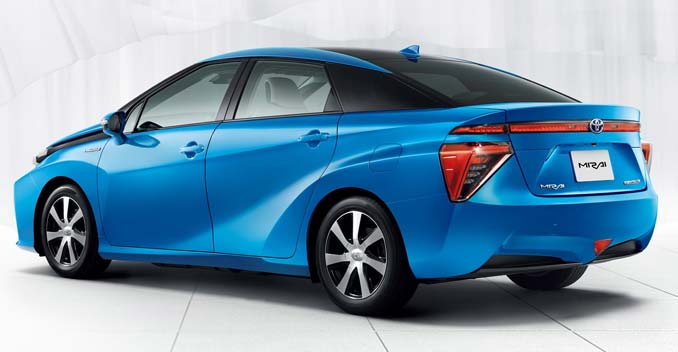
In a bid to aid in solving the global warming crisis, Toyota might soon start using human waste to power its upcoming electric cars. Apparently, the Japanese auto giant has found a way to convert sewage sludge, which is mostly made up of human waste, into hydrogen that can fuel cars like the Mirai.
Apparently, for this special project, it looks like Toyota is working in conjunction with the Fukuoka City Central Water Processing Plant, in Fukuoka, Japan. Usually, sewage in such water treatment plants is separated into liquid and solid waste. The solid waste called sewage sludge, which is a foul-smelling, brown lump that mostly ends up in landfills. But the folks at Fukuoka try to extract as much good from it as possible. Microorganisms are added to the mix, which breaks down the solid waste, creating biogas that is made up of about 60 per cent methane and 40 per cent carbon dioxide. Then, workers filter out the CO2 and add water vapour, which creates hydrogen and more CO2. They extract the CO2 again, and voila: pure hydrogen.
Now before you go ahead and start praising the Japanese for their smart idea let us tell you, the process is not new or any advanced technology. In fact we Indians have been doing the same thing for years, and that is exactly what Marc Melaina, a senior engineer at the National Renewable Energy Laboratory in Denver pointed out. He said, "In India, they have loads of biogas plants in villages and such that are just part of their energy infrastructure."
Essentially the sewage sludge, as mentioned earlier, is usually dumped in landfills, and in the case of biogas, it's most often burnt. In other words, there's no downside to using it to produce hydrogen instead. "They have to treat the water, and biogas is a natural by-product of that process," Melaina says. "You can burn it, you can turn it into electricity or you can turn it into hydrogen."
Now, Toyota has been one of the few carmakers, who have been continuously working to find new natural and sustainable fuel source to build zero-emission cars. While hydrogen fuel cells have proven to be an excellent option, Yoshikazu Tanaka, the chief engineer of the Toyota Mirai, Toyota's hydrogen fuel cell car, calls it a "chicken or the egg" problem. Apparently, no one wants to purchase hydrogen cars because there are no hydrogen fuel stations, and nobody wants to build hydrogen fuel stations because there are no hydrogen cars.
This is why Tanaka and several other experts feel that making hydrogen from sewage is probably one of the most economical ways to get sustainable fuel source for hydrogen-powered electric cars. To prove his point Tanaka said that currently, the Fukuoka plant produces 300 kg of hydrogen per day, enough to fuel 65 Mirai vehicles. If all the biogas produced by the plant were converted to hydrogen, that number would jump to 600 cars per day.
Source: Quartz (qz.com)
Related News


Popular Toyota Models


Latest Cars


Upcoming Cars


Latest News


 Seshan Vijayraghvan | Jul 8, 20262026 Land Rover Defender Updated; Gets New Vertex Trim, Accessory Kit And 6-Seat Layout OptionIn addition to the new Defender Vertex trim and the new upgrades, Land Rover has also introduced a special accessory pack for the luxury off-roader.1 min read
 Preetam Bora | Jul 8, 2026Opinion: India’s Ethanol Blending Policy Needs More Clarity & TransparencyIndia needs a clearer, more transparent and consumer-focussed approach to roll out ethanol blends in petrol. The current confusion will only add to less public confidence.6 mins read
 Jafar Rizvi | Jul 8, 2026Yamaha Aerox Electric Launched In India At Rs 2.82 LakhThe Aerox Electric costs nearly twice as much as the petrol-powered Aerox 155.2 mins read
 car&bike Team | Jul 8, 2026Nissan Tekton SUV To Debut Tomorrow: What To ExpectBased on the Renault Duster, the Tekton gets its own design inside and out while sharing the same platform and engine options.3 mins read
 car&bike Team | Jul 8, 2026New Mercedes-Benz GLB EV India Launch ConfirmedSecond-gen electric GLB is underpinned by Mercedes’ new MMA architecture and promises to offer more tech, greater cabin space and more useable range.1 min read
 Bilal Firfiray | Jul 8, 2026One-Off Rolls-Royce Phantom Regatta Unveiled; Inspired By English Sailing HeritageRolls-Royce unveiled the one-off Phantom Regatta, a bespoke Phantom Extended inspired by England's sailing heritage, ahead of its Goodwood Festival of Speed debut.1 min read
 Seshan Vijayraghvan | Jul 7, 2026Tata Altroz Petrol DCA Long-Term Review: Intercity & Highway Driving ReportWe tested the Tata Altroz Petro DCA’s highway manners, intercity performance, and real-world fuel efficiency.1 min read
 Seshan Vijayraghvan | Jun 29, 2026Renault Kiger vs Toyota Urban Cruiser Taisor: Which Underdog Deserves Your Money?Both the Kiger and the Taisor promise strong performance, solid features, comfortable cabins and everyday usability, all without breaking the bank. But which of these underrated subcompact SUVs deserves your money? Let's find out.1 min read
 Seshan Vijayraghvan | Jun 29, 2026Skoda Kodiaq RS Review: The Best Kodiaq Yet?The Skoda Kodiaq RS is finally here, and it's every bit as exciting as I expected. But was it worth the wait?7 mins read
 Bilal Firfiray | Jun 28, 2026BMW X6 M60i Review: It’s Back And HOW!The BMW X6 M60i blends a 530bhp twin-turbo V8, with its unmistakable coupe-SUV styling. There’s plenty of character, but is it worth your money?6 mins read
 Janak Sorap | Jun 25, 2026350cc Bajaj Dominar 400 Review: Same Character, Lower PriceA slightly lower displacement engine, a significantly lower price tag and nearly the same performance — the Bajaj Dominar 400 aims to be smarter rather than faster.6 mins read