
Tata Tiago iCNG Review: Changing Perceptions
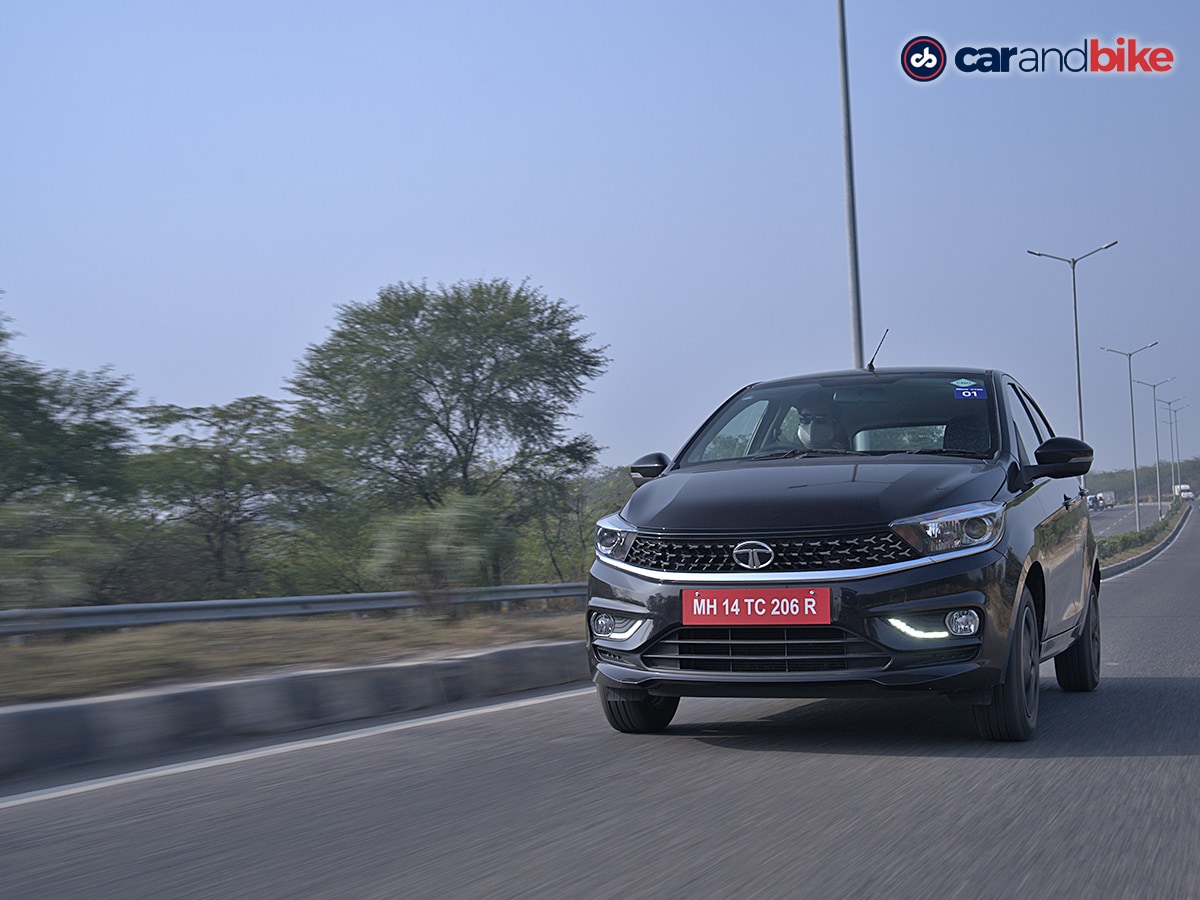
- Tata Tiago iCNG launched in January 2022.
- Tata adds factory-fitted CNG kit to the Tiago.
- It is the only car in the segment to offer 4 trim levels.
CNG and electric-powered cars appeal to those buyers looking for clean and affordable running, but these come at a premium over petrol-powered vehicles. It's also interesting to note that there is a stark distinction in their brand image as well– as EVs are seen as a more premium and upmarket product, while the CNG enabled cars, are thought of as more rudimentary and for the cost-conscious individuals. Even lining up to fuel at different pumps mostly behind public transport vehicles has certainly dented the market appeal of these cars. But Tata Motors is looking to change this opinion, and for this very reason, introduced new CNG products in the Indian market, that is in fact borrowed from their passenger vehicle outfit. Adding icing to the cake is the fact that they are also offered in a fully-specced, top-end variant of their respective siblings. We recently got to spend time with the Tata Tiago CNG, or iCNG, as the company likes to call it and have lots to report. So, let's begin, shall we?
Tata Tiago iCNG Design:
Let's start with the design changes on the Tiago iCNG first. Now, the Tiago iCNG comes in four trims- XE, XM, XT, XZ+ (ST), and XZ+ (DT), based on the facelifted Tiago launched in 2020, and so receives no major cosmetic changes to its exterior. The only difference here, however, is the addition of the ‘i-CNG' badge on the tailgate. The rest of the elements are carried over from the top-spec trim that it is based on. We have the XZ+ variant with us today, wrapped in the ‘Midnight Plum' shade, which not only adds its own unique touch but also looks quite dapper.

Based on the facelifted model, the Tiago iCNG receives no major cosmetic changes.
Photo Credit: Prashant Chaudhary
The chrome finish for the grille, inside door handles, and on the boot lid are some of the elements we find on the top-spec version. Speaking of the boot, sadly you get a reduced storage space of only 80-litre compared to the 242-litre of its petrol sibling, as it houses the CNG tank here.

The ‘i-CNG' badge is positioned on the tailgate.
Photo Credit: Vikash Singh
We feel, if Tata is making a claim of going premium with this product for a CNG buyer who has so far not had any options, then they should have also spent some money on R&D to develop an underbody CNG tank or some other solution to be able to offer boot space as well. Other notable elements include the projector headlamps with integrated LED DRLs and the 14-inch steel wheels that it runs on.

Thanks to the CNG tank, the boot space is reduced to 80-litre from 242-litre, with barely any place for luggage.
Photo Credit: Prashant Chaudhary
Tata Tiago iCNG Interior:
Inside, apart from the black and beige dashboard, and the upholstery, not much has changed. The fit, finish, and quality of materials are much like the standard version. The standard digital instrument cluster is slightly tweaked to accommodate the CNG icon on the left section of the screen, while the right section fits the fuel gauge for both modes of fuel.

Apart from the black & beige dashboard, and the upholstery, not much has changed inside.
Photo Credit: Prashant Chaudhary
The readability of the information displayed is also quite clean and bright. The rest of the cabin is untouched. You get the 7.0-inch touchscreen infotainment system complete with Android Auto and Apple CarPlay, 8-speaker Harman audio system, automatic climate control, electrically adjustable, and foldable wing mirrors. Go lower down the trim order, and the Tiago still gets a fair number of features that would appeal to a buyer opting for the base variant, or even the slightly higher ones.

The digital instrument cluster is tweaked to accommodate the CNG icon on the left section of the screen.
Photo Credit: Prashant Chaudhary
Apart from the standard safety features one receives on the top-spec version, you also get manual AC controls, black & grey interiors, all four power windows, rear parking sensors with display, manual central lock, piano black ORVM, and a cooled glovebox, which are all part of the other trims.
Tata Tiago iCNG: How Is To Drive?
The Tata Tiago iCNG features the same 1.2L Revotron, 3-cylinder petrol engine that is good enough to produce 73bhp and 95Nm of peak torque, which is 13bhp and 18Nm less than its petrol sibling, whereas, transmission is handled by the same 5-speed manual box. We drove the top-spec XZ+ Tiago for more than 100km, and our initial impression is that it retains the fun, zippy drive that the Tiago is known for.

The Tiago iCNG features the same 1.2L Revotron, 3-cylinder petrol engine, but it is tuned to produce 73bhp and 95Nm of peak torque.
Photo Credit: Prashant Chaudhary
Its power delivery is quite linear, and the engine never feels exhausted despite more than 1,050kg of kerb weight. It revs freely and strongly and accelerates easily even when you are at a higher gear at low speeds. The engine offers good low-end punch and city drivability is fine but start pushing the car a bit and you'll notice that the mid-range is quite dull and lacks the resolve.

The driving manner of the iCNG variant is similar to its petrol sibling.
Photo Credit: Prashant Chaudhary
Things improve once you reach the higher end of the rpm spectrum. We did feel a noticeable vibration inside, but that's not a deal-breaker once you get moving. At lower speeds, the car is easy to maneuver, though it is not quick to respond. The compact footprint also works wonders in clogged localities. The suspension is tuned more towards comfort rather than carving out bends. Bumps and irregularities are taken care of with some composure and only the sharpest of the ruts are felt inside. The 168mm of ground clearance takes care of the underbelly from hitting bad patches. We weren't admirers of the facelifted Tiago's steering, and our views are similar here as well, with dreary feedback, and a significant amount of understeer when pushed hard.
Tata Tiago iCNG: How safe is it?
In terms of safety, the Tiago iCNG comes standard with dual-front airbags, ABS with EBD, corner stability control, speed alert, seatbelt reminder and speed-dependent door locks, follow-me-home lights, a rearview camera with parking sensor, rear wiper with a wash feature, and rear defogger, to name a few. To further this, Tata has also incorporated the engine to shut off and won't start up unless the fuel lid is closed. We tried this out, and it works like clockwork.

Tata has also incorporated the engine to shut off, which won't start up unless the fuel lid is closed.
Photo Credit: Prashant Chaudhary
The tech can also detect leaks, at which point it will switch over to petrol automatically. We liked the fact that the car can be started directly in CNG mode, which is a feature not offered by any of its rivals. Tata is still awaiting a Global NCAP rating, but remember the petrol variant received a 4-star rating and Tata will hope to retain that.
Tata Tiago iCNG: Price Wars
The Tata Tiago iCNG is priced from Rs. 6.10 lakh for the base XE trim, going up to Rs. 7.53 lakh for the top-spec XZ+ trim. The starting price is identical to that of the Hyundai Santro CNG, but Rs. 3,000 cheaper than the Maruti Suzuki Wagon R CNG. At the top end, the Tiago is pricier by around Rs. 1 lakh compared to its nearest competitor, the newly launched Maruti Suzuki Celerio CNG.

The Tata Tiago iCNG is offered in 4 trims including a top-spec XZ+ variant as well.
Photo Credit: Prashant Chaudhary
However, unlike the others, the Tiago CNG is the only one in the segment to offer four trims, including a fully decked up top-of-the-line variant. Hence, buyers won't compromise on features over the petrol sibling, which is not the case with others in the segment. Overall, the Tiago iCNG is priced competitively, but it's worth noting that these are introductory, so expect a hike in the time to come.
Verdict: Should you buy one?
The CNG-powered market is going to be one of the hotly contested segments in the coming future, mainly for two reasons- first, it will look to fill the void left by the lack of newer diesel products in the market, and secondly because premium features will soon trickle down to these models, enhancing their premium quotient among prospective buyers. With their CNG models, Tata will look to capitalize more than 10 per cent in this segment, as it is still in a promising stage with opportunities to grow.

A combined range of around 1,000km could convert buyers to CNG cars.
Photo Credit: Prashant Chaudhary
For us, the Tata Tiago iCNG fulfills most of the promises made by the company, in terms of its driving capability, affordability, and of course features, that are available even in its lower-end derivative for buyers to consider a CNG product as their primary vehicle. Another plus point that goes in the Tiago iCNG case, is the fewer trips required to rejuvenate it, since both the fuel modes offer a combined range of close to 1,000km.

carandbike is not merely another name in the world of automotive web sites. We bring together the best from the world of both, cars and bikes. New cars, used cars, new bikes, - we endeavour to help you with all of that. Additionally, carandbike also strives to keep its users updated with the latest from the global automotive industry. car price, car reviews, car dealers, new bikes, and everything in between, carandbike is happy to help!
Read all latest news and reviews from car&bike Team →


Related News


Learn more about


Popular Models


Latest Cars


Upcoming Cars


Latest News


 car&bike Team | Sep 29, 2026Skoda To Hike Prices By Up To Rs 20,000 From October 1The carmaker cites rising input and operational costs for this hike.1 min read
 Jafar Rizvi | Sep 29, 2026Honda ADV 160 Deliveries Delayed: Will Begin Early In 2027car&bike understands that a production-related constraint has pushed back the timeline.2 mins read
 car&bike Team | Sep 29, 2026Skoda Slavia Facelift To Launch On October 6The Slavia facelift gets a new 8-speed automatic for the 1.0 TSI, rear-seat massage and 360-degree cameras.2 mins read
 Sarthak Mahajan | Sep 29, 2026Suzuki Unveils New 1.2-Litre Turbo-Petrol Engine, India Launch ExpectedThe engine produces 125bhp and 230Nm of peak torque.1 min read
 car&bike Team | Sep 29, 2026Ultraviolette Shockwave To Get New 100V Architecture, Launch In Q1 2027The FUNDURO-inspired electric motorcycle will be offered in single- and dual-seat configurations.1 min read
 Bilal Firfiray | Sep 29, 2026Volkswagen Tiguan Electric To Debut In OctoberIt will go by the name ID.Tiguan, and will be sold alongside the petrol and hybrid version of the Tiguan.1 min read
 Bilal Firfiray | Sep 28, 2026Renault Triber 1.0 Turbo Review: Was It Necessary?With the new RGEP platform, the Triber has received a much-awaited turbocharged petrol engine. It makes more power now, but was it necessary for this seven-seater MPV's fitness to purpose?5 mins read
 Girish Karkera | Sep 26, 2026Mahindra Thar OG Review: An Ode To The Past But Aimed At The FutureOn the surface, the new Mahindra Thar OG might look like a facelift, but that is more than meets the eye.7 mins read
 Jafar Rizvi | Sep 28, 2026TVS Orbiter Long-Term Review (Report 2): Slow But SmoothAfter nearly three months with the TVS Orbiter, its relaxed performance remains its biggest weakness, but easy handling, comfort and usable real-world range make it a capable city commuter.1 min read
 Bilal Firfiray | Sep 19, 2026MG Hector Tomahawk EV Review: Play It SafeMG’s new electric SUV has one of the coolest names ever, and the coolest temperament amongst its peers. But is it worth buying?7 mins read
 Preetam Bora | Sep 16, 2026Royal Enfield Himalayan 440 Review: Better Than the 450?The new Himalayan 440 with an upsized engine and gearbox has certainly improved as a touring machine and at an extremely attractive price of Rs. 2.29 Lakh. Is it the better Himalayan to choose for many riders?9 mins read