
Opinion: India’s Electric Scooter Race Heats Up

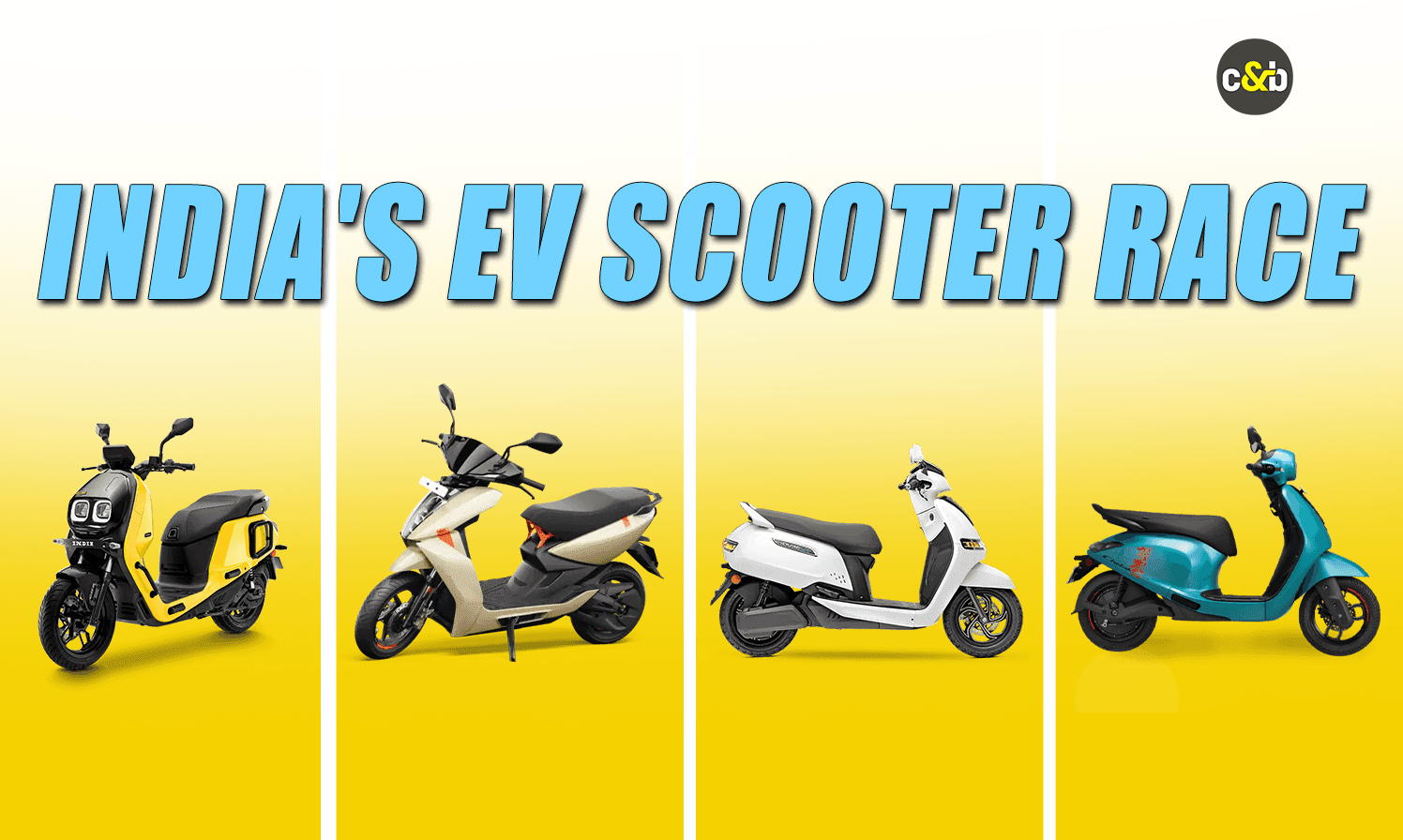
- Electric scooter segment expected to grow aggressively
- Start-ups, legacy brands vying for leadership
- Pricing, performance, reliability & range key to success
The real debate in India’s electric scooter segment is whether traditional OEMs can outmanoeuvre nimble start-ups that built the category from scratch. The commuter segment – the bread and butter of India’s two-wheeler market – is surely and certainly shifting toward electrification. With rising fuel prices, worsening urban congestion and policy tailwinds accelerating adoption, electric scooters have moved from niche experimentation to mainstream intent.
Today, this segment is the beginning of an aggressive race for scale, distribution and brand trust. As battery costs decline and charging networks expand, the category is rapidly evolving from just early adopters to mass consumers. And increasingly, the question shifts from viability to dominance in the world’s largest two-wheeler market.
The Start-Ups
If there’s a single start-up which laid the foundation for today’s electric scooter ecosystem, it will be Ather Energy. Conceived in college by friends and students at IIT Madras to becoming one of the leading players in India’s electric two-wheeler journey, Ather had its basics right. Launched in 2018, the Ather 340, and then the 450X set benchmarks in performance, software integration, charging infrastructure (Ather Grid) and product thinking. Ather didn’t just develop and sell a scooter – it defined what a premium EV could be.
Also Read: 2025 Ather 450X First Ride Review
Ather has always been R&D-first. That meant slower portfolio expansion, but deeper engineering roots and strong brand equity. With a new manufacturing facility coming online and a mass-market product strategy unfolding, the next 12 months could place Ather in a very different league altogether.
Meanwhile, other start-ups took varied approaches.
Also Read: Ola S1 Pro Review
Ola Electric started with unmatched ambition but stumbled with product issues, consumer complaints, and an overextended rollout strategy. Despite being a market leader, Ola today is facing a critical juncture with a sharp decline in sales, increasing pressure from competitors, and mounting customer dissatisfaction that has severely eroded brand trust.
Also Read: Ola S1 Pro Sport Launched At Rs. 1.5 Lakh
But there are others who have started on the right notes. Bengaluru-based River has carved out a distinct identity. The company describes its first product, the River Indie, as “the SUV of scooters” and prioritises high utility, robust build quality and massive storage. Large 14-inch wheels, stable handling as well as strong practical range and performance have earned the Indie praise, from consumers who love the company’s responsive customer service and the scooter’s overall reliability.
Also Read: River Indie First Ride Review
Simple Energy introduced a promising electric scooter in 2022 as its first product – the Simple One. Now, in 2026, Simple has announced the Gen 2 version of the One, claiming even more range of 265 km and new features. Simple has also announced its next product, the Simple Ultra, promising a whopping 400 km range! But the brand has suffered from timing delays in scaling up its network and production. And in this industry, timing is everything.
Also Read: Simple One Gen 2 First Ride Review
Ampere EV, a brand under Greaves Electric Mobility achieved significant growth in late 2025. However, it faces several key challenges as it looks to solidify its position against dominant competitors. Ampere was part of the original top 3 EV brands (with Hero Electric and Okinawa) that faced severe government crackdown for violating local manufacturing and subsidy norms under the Faster Adoption and Manufacturing of Electric Vehicles II (FAME II).
Also Read: Ampere Nexus Review
Although the brand successfully pivoted and paid refunds to become compliant by 2023, it is still in the rebuild phase to regain market trust and market share. Subsidy disruptions also reshaped the industry. Companies that relied too heavily on incentive-driven pricing suddenly had to rethink product positioning and margins. Others like Hero Electric and Okinawa are no longer in contention.
Also Read: TVS iQube Review
Traditional OEMs: Slow & Steady
Legacy manufacturers entered the EV race cautiously, but with deeper distribution muscle and consumer trust. And today, brands like TVS Motor Company, Bajaj Auto and Hero MotoCorp are making rapid inroads into the electric scooter segment with well-rounded products backed by consumer trust.
The TVS iQube, launched in 2019, was basic and no-frills, as compared to, say a Ather 450X. But the iQube’s strengths lies in its dependability. It didn’t aim to disrupt the market; it aimed to convert. With its safe, universally appealing design and engineering strengths, the iQube has carved out a niche in the segment.
Also Read: TVS iQube Vs Ather 450X Comparison Review
In 2020, Bajaj arrived in the scene with its Chetak electric scooter. With understated styling which is universally appealing, combined with a comfortable ride and relaxed performance, the Chetak was reassuring – and that mattered.
Also Read: Chetak C25 First Ride Review
Then came the Vida V1 from Hero MotoCorp in 2022. With Vida, India’s largest two-wheeler manufacturer set up a dedicated EV vertical. The ramp-up though was slow, availability limited and early charging compatibility issues (including initial interoperability challenges with Ather’s fast chargers) dented momentum. Heavy discounting followed.
However, newer iterations like the latest VX2 (with Battery-as-a-Service models) show that Hero is learning and recalibrating, expanding into more cities with a clearer mass-market focus.
Also Read: Vida VX2 Plus First Ride Review
The writing on the wall is clear. Traditional OEMs optimise for Indian realities – durability, dealer reach, pricing discipline and predictable ownership experience. They may not win the early tech headlines, but they win trust over time.
And then the Japanese arrived – Late
The Japanese giants – once synonymous with reliability and scale – have been surprisingly late to India’s EV party.
Honda Motorcycle and Scooter India (HMSI) introduced the QC1 and signalled an electric future for its highest-selling scooter nameplate, the Activa. But early impressions suggest Honda’s electric products may not match rising market expectations.
The QC1’s performance leaves a lot to be desired and the Activa-e’s subscription-only plans dilute the basic expectation that running costs of EVs are supposed to be more affordable.
Also Read: Honda Activa E First Ride Review
Suzuki Motorcycle India also brought in the e-Access, borrowing the name of its highest-selling petrol-powered 125 cc scooter. The launch of the e-Access is itself delayed by over a year, and when it finally did, its price of Rs. 1.88 lakh (Ex-showroom) makes it substantially more expensive than other established rivals. The e-Access arrived fashionably late, but its pricing pushes it beyond what value-conscious commuters will accept.
Also Read: Suzuki e-Access First Ride Review
Yamaha Motor India's EC-06, based on the River Indie platform is also a pricey proposition. An electric version of its performance scooter, the Aerox will also be introduced soon. But if pricing overshoots expectations, distribution reach alone won’t justify the premium.
And that’s the paradox. Consumers expect Yamaha to deliver something exciting, Honda to deliver affordability and range, and Suzuki to balance price, quality and practicality. Unfortunately, for the Japanese giants, brand strength alone won’t save the day.
Also Read: Yamaha EC-06 Launched At Rs. 1.68 Lakh
A Question of Brand Equity
Today, brand equity in electric scooters is surprisingly competitive. Brands like Ather Energy command strong aspirational recall. River is emerging steadily. Ola still has visibility despite its struggles and stumbles.
But in the commuter segment, refinement and reliability win. Products like iQube, Chetak, and increasingly, Vida, show how traditional OEMs are catching up, not with flashy disruption, but with rounded execution. Here, a strategy of being slow and steady seems to be reaping dividends and consumer trust.
Start-ups proved that Indian electric scooters could be fast, smart and desirable. Traditional OEMs proved that scale, service networks and patient execution still matter.
The next phase in the electric scooter battleground won’t be won by hype. It will be won by factors like real-world range that matches claims, pricing aligned to Indian realities, reliable charging ecosystems, manufacturing scale and after-sales trust. It will be interesting to see which way the wind blows, and which brands will get fair winds on their sails. After all, brands that remain steadfast will earn loyalty and trust – the main ingredients of a recipe for success.
Related News



Latest Cars


Upcoming Cars


Latest News


 Jafar Rizvi | Jul 4, 2026New-Gen Toyota Hilux India Launch On July 28The ninth-gen Hilux made its global debut in November 2025.3 mins read
 car&bike Team | Jul 4, 2026TVS Overtakes Hero, Honda In June 2026 Two-Wheeler SalesTVS Motor Company emerged as the biggest two-wheeler manufacturer among the three in June 2026, selling 5.65 lakh motorcycles and scooters during the month.2 mins read
 Jafar Rizvi | Jul 4, 2026Ferrari 12Cilindri Manuale Unveiled: The Gated Shifter Is Back, But Not Quite As You RememberFerrari has brought back the gated shifter and a proper three-pedal setup, but with a modern twist.3 mins read
 car&bike Team | Jul 3, 2026Yamaha R2 India Launch Expected in August 2026Like the Yamaha R15, the new R2 will be developed and manufactured in India and is expected to be powered by a 200 cc single-cylinder engine.1 min read
 Carandbike Team | Jul 3, 2026Tata Sierra ICE vs EV: What Are The Differences & Similarities?If you are looking to compare the Tata Sierra ICE and the newly launched Sierra EV in terms of design, features, powertrains, safety, pricing and key differences, look no further, as here’s everything you need to know about the two.1 min read
 car&bike Team | Jul 3, 2026Renault Kwid Prices Slashed: Fully-Loaded Climber MT Now Costs Rs 5 LakhRenault has updated the Kwid with a simpler two-variant line-up, revised prices and subtle styling tweaks.1 min read
 Seshan Vijayraghvan | Jun 29, 2026Renault Kiger vs Toyota Urban Cruiser Taisor: Which Underdog Deserves Your Money?Both the Kiger and the Taisor promise strong performance, solid features, comfortable cabins and everyday usability, all without breaking the bank. But which of these underrated subcompact SUVs deserves your money? Let's find out.1 min read
 Seshan Vijayraghvan | Jun 29, 2026Skoda Kodiaq RS Review: The Best Kodiaq Yet?The Skoda Kodiaq RS is finally here, and it's every bit as exciting as I expected. But was it worth the wait?7 mins read
 Bilal Firfiray | Jun 28, 2026BMW X6 M60i Review: It’s Back And HOW!The BMW X6 M60i blends a 530bhp twin-turbo V8, with its unmistakable coupe-SUV styling. There’s plenty of character, but is it worth your money?6 mins read
 Janak Sorap | Jun 25, 2026350cc Bajaj Dominar 400 Review: Same Character, Lower PriceA slightly lower displacement engine, a significantly lower price tag and nearly the same performance — the Bajaj Dominar 400 aims to be smarter rather than faster.6 mins read
 Preetam Bora | Jun 25, 20262026 Bajaj Pulsar NS400Z First Ride Review: Smaller Engine, But Should You Buy It?The Bajaj Pulsar NS400Z won our Two-Wheeler Upgrade of the Year. Then new tax slabs happened. Smaller engine, same badge – but does it still deliver?6 mins read